Three saddles in, still sore? What the pain is actually telling you
Numbness, wrist ache, and sit bone soreness each come from a different part of the fit, and only one of them is usually solved by buying another saddle.
Also here
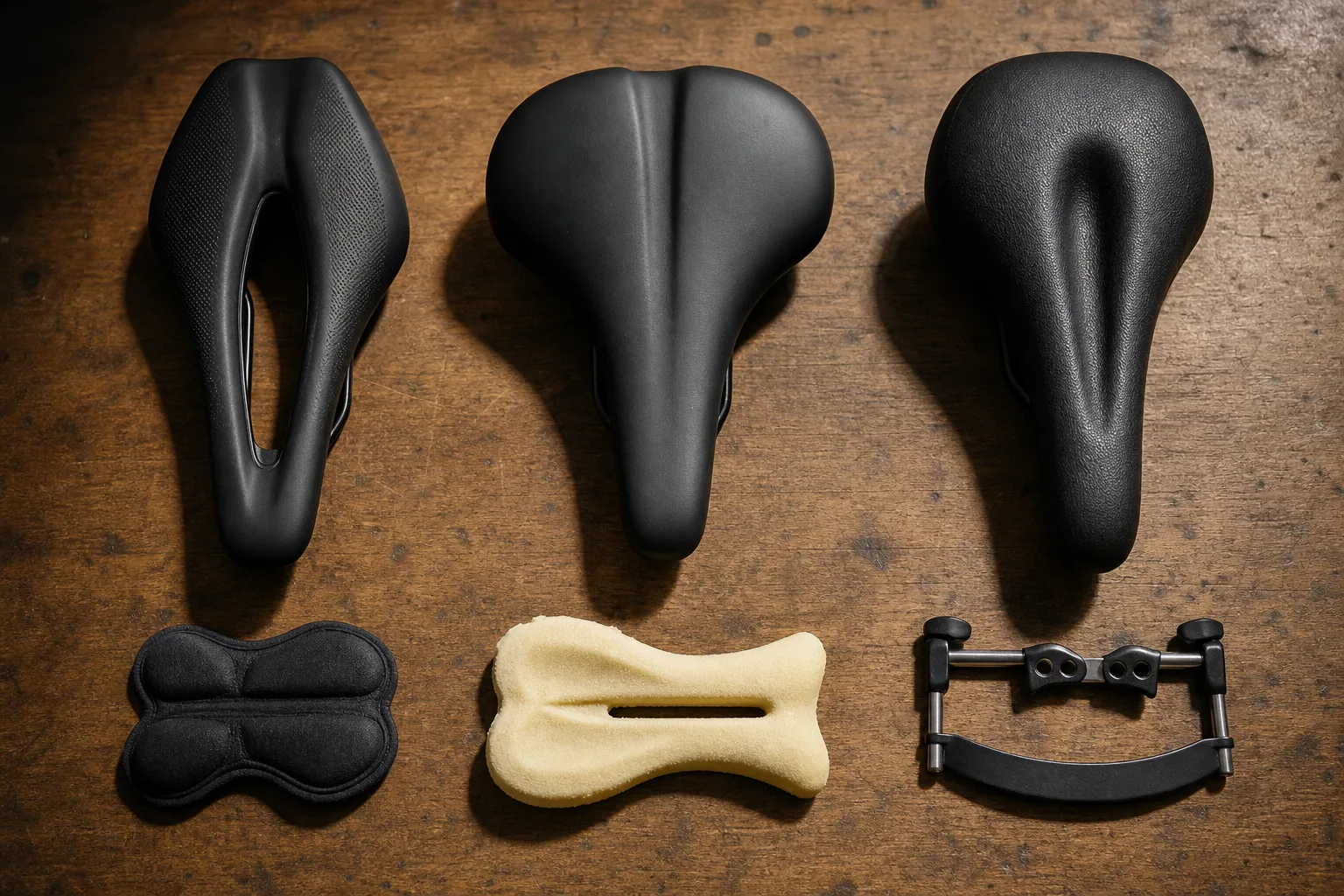
Note which discomfort arrives first on a ride, not which one is loudest at the end. The earliest symptom usually sits closest to the actual cause.
A rider in her fifties came into a shop last spring with three saddles in a canvas bag, all bought within four months, all for the same hybrid. The first was the stock one. The second was wide and heavily padded, bought after two weeks of soreness. The third was a cutout model bought after the padding made things worse. She was riding maybe eight miles at a stretch on rail trail and paved shoulder, and by mile four both hands were numb and she was standing up on the pedals to get blood back into places she did not want to discuss. The saddles cost her something in the range of a decent wheel.
Her seat height was about an inch and a half low, and her handlebar was two inches below the top of the saddle on a bike sold as an upright commuter. Neither of those is a saddle problem. Both of them produce symptoms that feel exactly like a saddle problem, which is why the saddle aisle absorbs so much money that should have gone to a stem and a wrench.
Numbness in the hands versus numbness in the crotch
These two get lumped together as discomfort and they point in opposite directions. Hand numbness, usually in the ring and little fingers, means weight is resting on the outside of the palm for long stretches without relief, which happens when the bar is too far away, too low, or both, and the rider is bracing rather than balancing. Soft tissue numbness in the saddle area means the pelvis is rotated forward onto the nose of the saddle, and that rotation is almost always the reach and drop of the handlebar pulling the torso down, not the saddle's shape. A careful reader checks which numbness came first on the ride. If the hands went before anything else did, start at the front of the bike.
Wrist pain versus sit bone soreness
Wrist pain that shows up as a dull ache on the thumb side, or a hot spot in the heel of the hand, is a load problem and a bar angle problem in roughly that order. Too much body weight forward, then a grip that forces the wrist into extension. Sit bone soreness is different in character: it is deep, symmetrical, arrives a day later, and it fades as the tissue adapts over several weeks of consistent riding. Sit bone soreness that does not fade, or that lands on one side only, is worth taking seriously, because one-sided soreness often means the saddle is not level or the rider is reaching for a pedal that sits too far below the hip.
Seat height and setback do different jobs
Height governs knee extension and how much of the rider's weight the legs can carry. Set it low and the legs never fully unload the pelvis, so the sit bones take a beating that no amount of gel will fix. Setback, meaning how far the saddle sits behind the bottom bracket on its rails, governs balance: too far forward and the rider leans on the hands, too far back and the reach to the bar stretches out. The common mistake is using setback to fix reach, sliding the saddle forward to bring the bars closer, which trades one problem for another. Reach belongs to the stem and the bar. A shorter stem or a riser bar costs less than most saddles and changes more.
Measuring sit bone width, and when to pay someone
Sit bone width is worth measuring because it is the one saddle variable that is genuinely about the saddle. Shops do it with a memory foam pad or corrugated cardboard: sit down, lean forward slightly to mimic riding posture, stand up, measure center to center between the two dimples, then add roughly an inch or so depending on how upright the position is. It takes five minutes and costs nothing. Pay for a full fit when the symptoms conflict, when there is a knee or back history, or when the bike is new enough that the shop can still swap a stem or bar as part of the work. The Consumer Product Safety Commission oversees bicycle safety requirements for bikes sold in this country, but nothing in that framework speaks to whether a given frame suits a given body. That part is measurement and adjustment.
The rider with the three saddles went back to the stock one, raised her post, and had a shorter riser stem installed. The soreness ended in about ten days.