Comfort, hybrid, cruiser, or path bike? What the labels are really telling you
Four category names, often one underlying frame. How to read past the marketing label to the geometry, tire clearance, and gearing that decide how a bike rides.
Also here
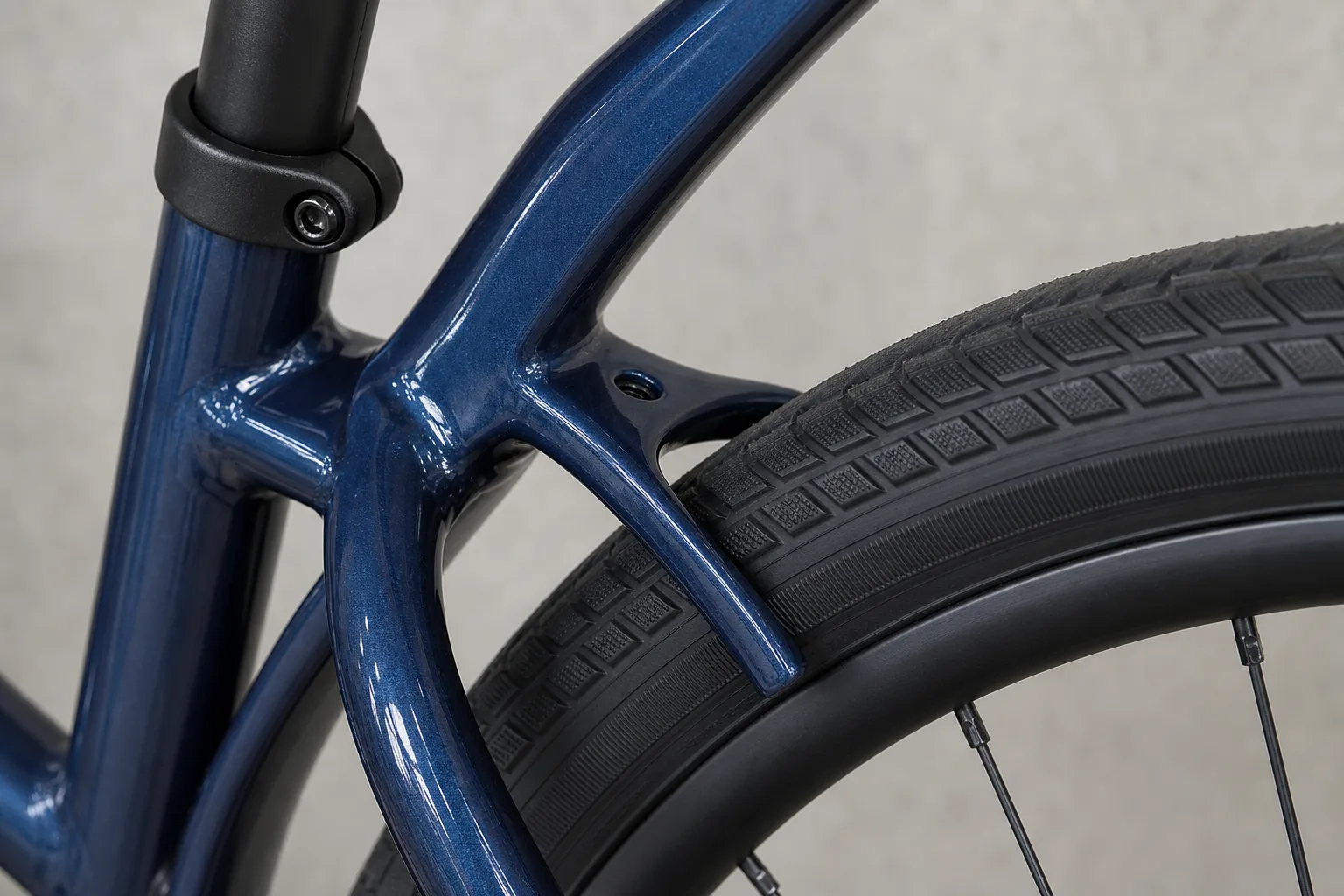
No standards body defines where a hybrid ends and a comfort bike begins. Each manufacturer draws its own line, so identical frames can appear under different segment names.
Two bikes hung on the same rack at a shop outside Lenoir, one tagged comfort and one tagged path, and the price difference was about forty dollars. Same head tube angle by eye, same swept-back bar, same 700x38 tire, same seven-speed cassette with a single chainring up front. The comfort model had a slightly wider saddle and a suspension seatpost. The path model had a rear rack mount and a marginally lighter fork. Under the paint they were the same platform, built in the same factory, sold to two different shoppers who each believed they were buying a category.
The labels describe a buyer, not a frame
Comfort, hybrid, cruiser, and path are marketing segments, not engineering standards. Manufacturers assign them by the picture on the catalog page: the cruiser gets a coaster brake and a beach, the path bike gets a greenway and a water bottle. There is no governing body that defines where a hybrid stops and a comfort bike starts, and no two brands draw the line in the same place. The Consumer Product Safety Commission oversees bicycle safety requirements in the United States, covering things like reflectors and brake performance, but it has nothing to say about what a company calls its own model.
That leaves the reader doing the sorting. Fortunately the underlying variables are few and they are all published. Frame geometry sets how upright you sit and how quickly the bike responds to a steering input. Tire width and clearance set what surfaces the bike will tolerate. Gear range sets what grades you can climb without standing. Almost every real difference in how a casual bike feels traces back to those three, and the label on the top tube is downstream of all of them.
Reading the three numbers that matter
Start with the stack and reach figures in the geometry chart, if the brand publishes them, or with the simpler question of how far below the saddle the handlebar sits. A cruiser puts the bar level with or above the saddle, which is pleasant for two miles and tiring at eight because your weight sits entirely on your sit bones with no load carried by your arms. A hybrid drops the bar an inch or two. A comfort bike splits the difference and usually adds a shorter top tube so you are not reaching. None of that is guesswork; it is measurable on the shop floor with a tape and a level.
Tire clearance is the second number, and it is the one most often obscured. A frame rated for 700x45 will take a 38 with fenders, which is the practical setup for gravel shoulders and cinder greenways around here. A frame that maxes out at 32 will not, no matter how the catalog describes its adventure credentials. Check the fork crown and the chainstay bridge on the actual bike rather than trusting the category. Then look at the gearing: a single front chainring with a narrow cassette will run out of low gears on the first real hill.
Matching the label to the ride you actually do
For paved errands under three miles, a cruiser is genuinely well suited, and its single speed simplicity is an advantage rather than a compromise. For a mixed ten mile loop with pavement, a stretch of packed gravel, and one climb, the useful bike is whatever has 38mm or wider tires, a bar three to five inches below the saddle, and a low gear low enough to spin up the grade seated. That machine gets sold as a hybrid, a comfort bike, a fitness bike, and a path bike depending on the brand. The spec sheet resolves the question that the label leaves open.
Where the categories genuinely diverge is in what they leave off. Cruisers rarely have rack and fender mounts or gearing for hills. Some hybrids come with a suspension fork that adds weight without adding much, and that fork is usually the tell that the bike was priced to a number. Comfort models often include the suspension seatpost, which does more good than a cheap fork for the same money. Those are checkable details, visible in a photograph, and worth more attention than the segment name.
What to bring to the shop
Write down your longest realistic ride, the worst surface on it, and the steepest hill, then ask for the geometry chart and the maximum tire size. A shop that can answer both questions without hedging is a shop worth buying from, and the answers will narrow four categories down to two or three specific bikes fast. Test ride those on a slight grade rather than a flat parking lot. The bike that still feels easy at mile eight is the one, whatever the sticker calls it.